How to Improve Your Shooting Form
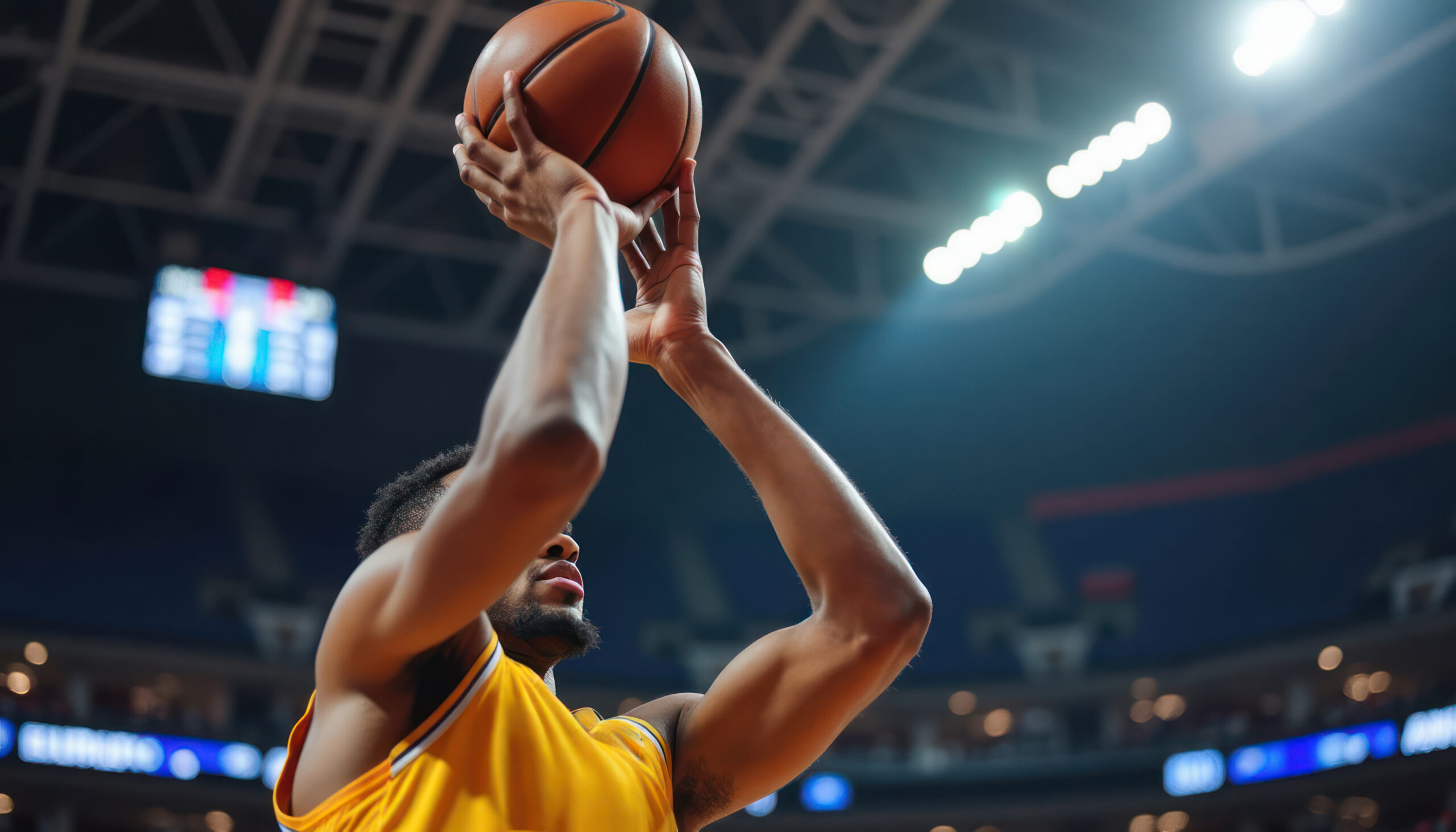
While you need good technique and shooting form to increase your shooting accuracy, your form doesn’t have to be perfect. The form varies from player to player, depending on what is comfortable. By following key practice techniques, you can get better. At You Reach I Teach Basketball Academy, we provide proven techniques to help improve your shooting precision and confidence.
Master the Fundamentals of a Proper Shooting Form
Having a solid foundation in the fundamentals is the first step in improving your shooting form. The right-hand placement, footwork, and follow-through are the building blocks that turn practice into consistently perfect shots.
Establish a Stable Base for Powerful Shots
During basketball training you should get the form right. Your feet should be shoulder-width apart to create a foundation for powerful jump shots. In this position, the knees are slightly bent to engage your leg muscles for stability and strength. The balls of both feet evenly support your weight to stay agile and ready to move.
You can place your shooting foot slightly ahead (the one on the same side as your shooting hand) to align your body with the basket. But you can also have both feet perfectly aligned, like some basketball players in the NBA. It’s all a matter of preference. Just make sure you are consistent in how they are positioned.
Perfect Your Grip on the Ball for Precision and Control
Hold the ball with your fingertips, not your palm, for better control and feel of the ball. Place your shooting hand under the ball, with your elbow pointing inward to give your shot a straight path. Your other hand is placed on the side and only stabilizes the ball. It does not push or flick it during release.
Keep your shooting hand’s thumb at a 45-degree angle from the plane of your hand, forming a slight “V” with your index finger for precision. You should grip the ball lightly with your fingertips rather than pressing it tightly against your palm or finger pads, giving you both flexibility and control.
Find Your Ideal Shot Pocket for Consistency
The shot pocket is your personal launching point for every shot, positioning the ball just before starting the shooting motion. Typically, players hold the ball around chest or chin level. But stronger or quicker players may prefer it closer to forehead level for quicker release against defenders. Find your ideal spot and stick to it for consistency.
In the shot pocket, your shooting arm is placed under the ball, ready to push upward, while your guide hand is on the side, keeping it steady. The ball, your shooting eye, and the basket are all aligned, setting up your straight, repeatable shot path.
Moving the ball to the same spot every time you take a shot builds your muscle memory, which is crucial for making the motion consistent and efficient.
Execute a Smooth Release for Accurate Shots
A smooth shooting motion improves accuracy, preventing jerks, hitches, or awkward twists, as the ball’s motion is without jerks, hitches, or awkward twists. A smooth release is easier to repeat every time, allowing you to be consistent and have predictable results.
It is essential for maximum power transfer between your legs and arms. Lastly, fluid motion becomes second nature with practice.
Here’s how the release of the ball should go when making a shot:
- Start with an upward motion from your shot pocket, using your legs to initiate power.
- Keep your elbow under the ball as you lift it to give it a straight and controlled release path.
- Extend your elbow and wrist together, releasing the ball in one fluid motion.
- Snap your wrist forward to give the ball a backspin, helping it maintain its trajectory.
Aim for a high arc of around 45 degrees, which gives the ball a better chance of going through the hoop cleanly.
Lock in Your Follow-Through to Maintain Accuracy
The follow-through is the natural end to the chain of movements that started from your legs. Locking it in commits you to the motion after releasing the ball.
It ensures you’ve followed through with full effort and did not cut off the release or had a half-hearted motion that can throw off the release. Additionally, a locked-in follow-through lets you see and feel what you just did right or wrong, telling you what’s working or not.
Here’s how your follow-through should be:
- Fingers pointed toward the roof after release, as if reaching into a “cookie jar” above the rim.
- Bend your wrist forward in a “gooseneck” position to lock in the proper direction and spin.
- Your palms should face down at the end to avoid any sideways twist that could throw off the form shot.
To reinforce your muscle memory, we recommend holding your follow-through until the ball hits the rim. This movement should be consistent so that you can easily diagnose errors and maintain accuracy as you practice over time.
Focus on the Rim
Your eyes guide your body. This is why focusing on the rim of the basket improves your accuracy by aligning your shooting motion. Doing so also allows you to maintain better composure while under pressure, as you are less likely to be distracted by defensive players.
Locking in your gaze on your target reinforces intent and commits your goal to your mind, which can increase your success rate.
Achieve this focus by looking at where you want the shot to go as soon as you intend to shoot it. You can aim at the back of the rim for standard shots or the top corner of the backboard square for bank shots. Keep looking at the target through the shooting motion and after release.
Use Your Legs for Stronger Shots
Leg power is essential for your jump shot to reach the basket. Without it, three-point shots lack the force to even touch the rim. Using your arms for power ruins the shooting mechanics, which is not ideal for consistency, and can easily tire you out.
Additionally, leg-driven shots keep your upper body relaxed and create a higher arc for the ball, improving the chances of the ball going in.
To use your legs in your shots, follow these steps right before you take a shot:
- Start with a slight knee bend, loading your leg muscles and readying them for power.
- As you shoot, extend your legs and rise onto the balls of your feet, transferring energy to the ball.
- Let the ball go at the peak of your upward motion for maximum power and control.
- Engage your core to stabilize your body and transmit extra force from your torso to the ball.
Your legs and arms should be in rhythm with one another. Practice this movement by counting “one-two” (bend knees, then push up) to synchronize your leg motion with your jump shot. With three-pointers, focus on getting lift without forcing your arms.

Practice Drills to Improve Your Form
Understanding the shooting fundamentals is just the beginning. To truly improve your form, you need to apply them through consistent, purposeful practice. That’s where the drills below come in. They’re designed to help you practice the right way and make real improvements.
Beginner Drills
Beginners should focus on building and mastering the fundamentals of a proper shooting form. Aside from practicing proper mechanics and shooting form, you can do drills to focus on its important aspects.
One-Handed Shot Drill
This drill isolates the shooting hand, allowing you to perfect your hand placement and follow-through.
How to do it:
- Stand 3 to 5 feet from the basket.
- Place your shooting hand under the ball with your fingertips gripping it lightly. Your other hand will not touch the ball.
- Shoot with a straight arm extension and wrist snap.
- Hold the follow-through until the ball hits the rim.
- Make 10 shots with proper form before stepping back slightly.
Prioritize form over speed in this drill. You can use a mirror to ensure you have the stance and hand placement right.
Wall Shooting
The wall shooting drill works on your stance, balance, and use of legs without the distraction of a hoop. This is essential in ingraining a stable base for making a shot.
How to do it:
- Face a wall with no hoop, standing 5 to 7 feet away.
- Position feet shoulder-width apart with knees bent.
- Shoot the ball upward against the wall with the upper body relaxed, using your legs to power the jump shot and the core engaged.
- Complete the drill by hitting 20 to 30 wall shots with proper form.
Start slowly in this drill to lock in the foot positioning. Stay close to the wall for control, then adjust the distance once you get the hang of making wall shots.
Intermediate Drills
Once you have the shooting form drilled into your muscle memory, it’s time to make it usable when you’re playing. The drills below will help in improving your setup, building rhythm, and preparing for scenarios in basketball games.
Catch-and-Shoot
The catch-and-shoot trains your transition from catching a pass to shooting. This skill is essential for enhancing your shot readiness and form under moderate pace. You can do this with a partner or a rebounder or a wall to simulate passes.
How to do it:
- Stand 10 to 15 feet from the basket.
- Receive a pass, and quickly square up your feet to the hoop.
- Shoot with proper form.
- Aim for 20 shots and rotate to other spots like the wings and top of the key.
Start slow with your transitions from receiving the ball to squaring up for a shot. Focus on setting up your shot pocket and making a smooth release.
Spot Shooting
Spot shooting reinforces consistent shooting form across multiple positions. This drill builds your ability to score from various spots in the court, which is an essential factor in making you a competitive and important player in a basketball game.
How to do it:
- Choose 3 to 5 spots around the arc.
- Shoot 5 to 10 shots from each spot, shooting with the proper form each time.
- Move to the next spot after making a set number of baskets.
- Track how many shots in each spot to measure your progress over time.
The focus for this drill is the shooting form. Make sure you execute it properly wherever you are shooting from on the court. Record yourself to check for any mistakes in the form and randomize spots to avoid predictability. You can use a timer to increase the pace of the drill.
Advanced Drills
At this level, your objective is to enhance your adaptability and composure in different shooting scenarios without sacrificing your form. The advanced drills below simulate real play, allowing you to train yourself to shoot with proper form and make baskets under pressure.
Off-the-Dribble Shooting
This drill combines dribbling and shooting to maintain perfect form while moving. It is essential for preparing players for dynamic game situations.
How to do it:
- At 15 to 20 feet away from the basket, dribble 2 to 3 times.
- Plant your feet, square up, and take the shot with a quick release.
- Aim for making 15 shots.
- Vary your dribble moves to challenge your setup speed once you get the hang of shooting from a simple dribble
Stay low when dribbling to make your transitions to a shot faster. Record yourself while doing the drill, and focus on one flaw per session. Practice different moves, like a step-back or a fake, to improve your versatility.
Pressure Shooting
Pressure shooting tests your form under time or defensive constraints. The drill is useful for ensuring your shooting mechanics hold up in high-pressure scenarios in basketball games.
How to do it:
- Set a time for 60 seconds or have a partner play light defense.
- Shoot from various spots while moving – stop, set, and release under pressure.
- Maintain proper form despite the time or defensive challenge.
- Aim to hit 10 successful shots under time or defensive constraint.
We recommend starting with light pressure and focusing on form over making the shot. You will become more accurate once you get used to executing proper form even when under pressure. Ramp up the pressure with tighter defense or shorter time to ensure your progress.

Spot and Correct Common Mistakes
It’s important to recognize and address your flaws in shooting. It prevents these mistakes from becoming bad habits, which can be difficult and frustrating to correct. Here are some common mistakes to watch out for when learning and practicing your shooting form:
Dropping the Shooting Elbow
Signs you are making this mistake:
- Elbow too low or flared out
- Weak shot or flat arc
- Unpredictable shooting accuracy
- Slow release when shooting
To fix this, start the shooting motion with your shooting elbow bent, tucked under the ball, and pointed inward toward your body. Your arm should extend upward during release so that the elbow goes above eye level. Focus on locking your elbow straight post-shot and pause after shots to ensure it stays up and aligned with the basket.
Poor Balance
Signs your shooting form has poor balance:
- Leaning forward, backward, or sideways
- Weak shots due to uneven weight distribution
- Difficulty holding a consistent follow-through
Fix this mistake by adopting a stance of feet shoulder-width apart and distributing your weight evenly on the balls of your feet. Practice static shooting and check your balance before and after each shot. Improving your stability and leg power also goes a long way by incorporating squats and lunges into your workout.
Rushing the Shot
Signs you are making this mistake include:
- Sloppy shot mechanics
- Flaws in your form are evident
- Erratic ball trajectory
Correct your tendency to rush the movement by using a consistent sequence of dribbling, breathing, and then aiming when taking a shot.
This will serve as your pre-shot routine that will focus your mind and body on shooting. Then, train your pressure shooting in practice with a focus on solidifying your form against defense or time pressure.
Improve Your Shooting with Expert Basketball Coaching
You Reach I Teach Basketball Academy has helped countless players improve their shooting techniques by focusing on the basics that matter most. With the right form, smart practice, and a few key adjustments, you can build the confidence to knock down shots consistently. With our shooting machine sessions, we can help take your shooting to the next level—one step, one rep, one shot at a time.
Recent posts

What Is an Illegal Screen in Basketball?
No Comments
How to Choose the Right Basketball Shoes
No Comments

How To Prepare for Basketball Camp
No Comments
Get In Touch
From the gallery